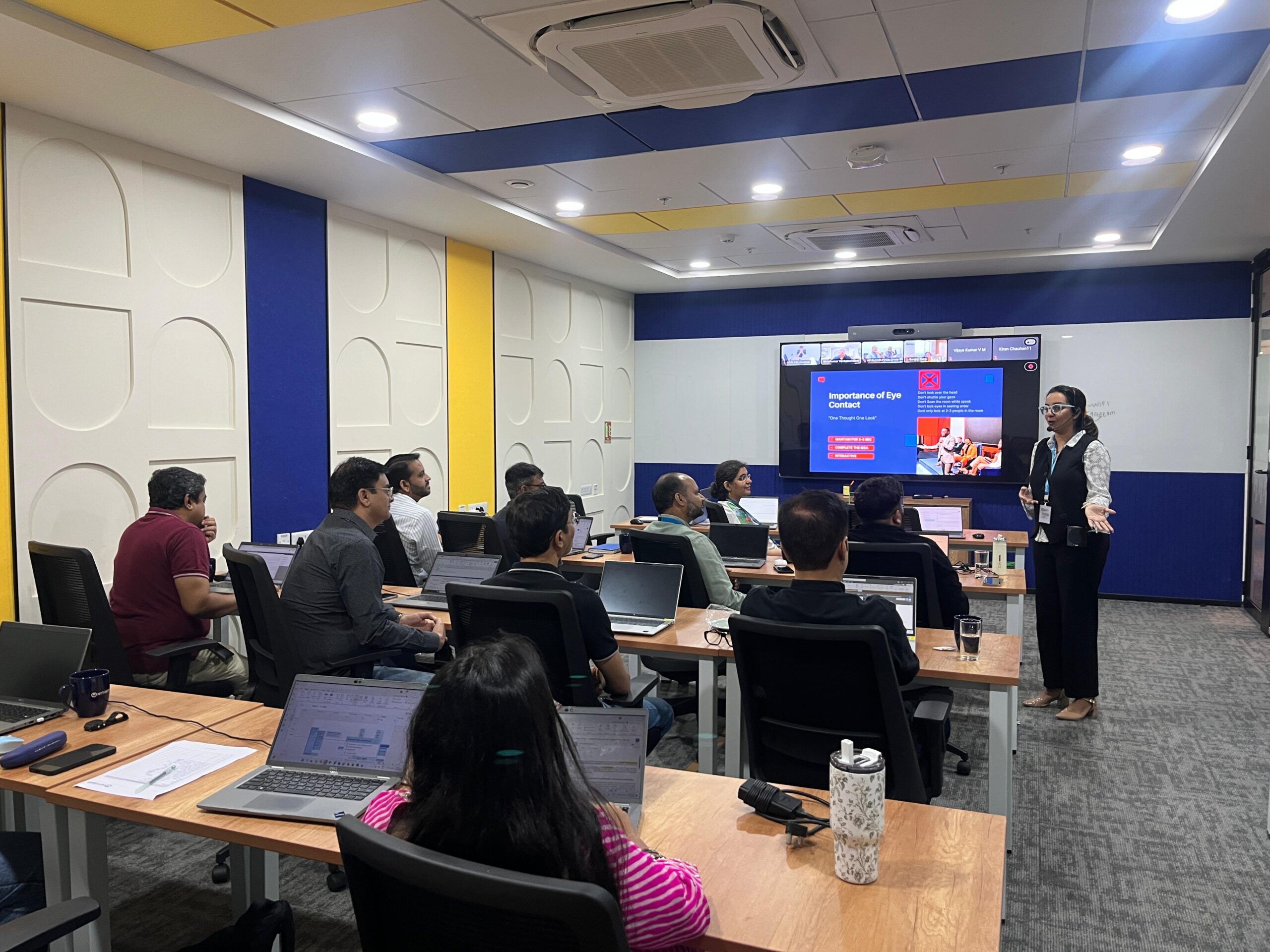
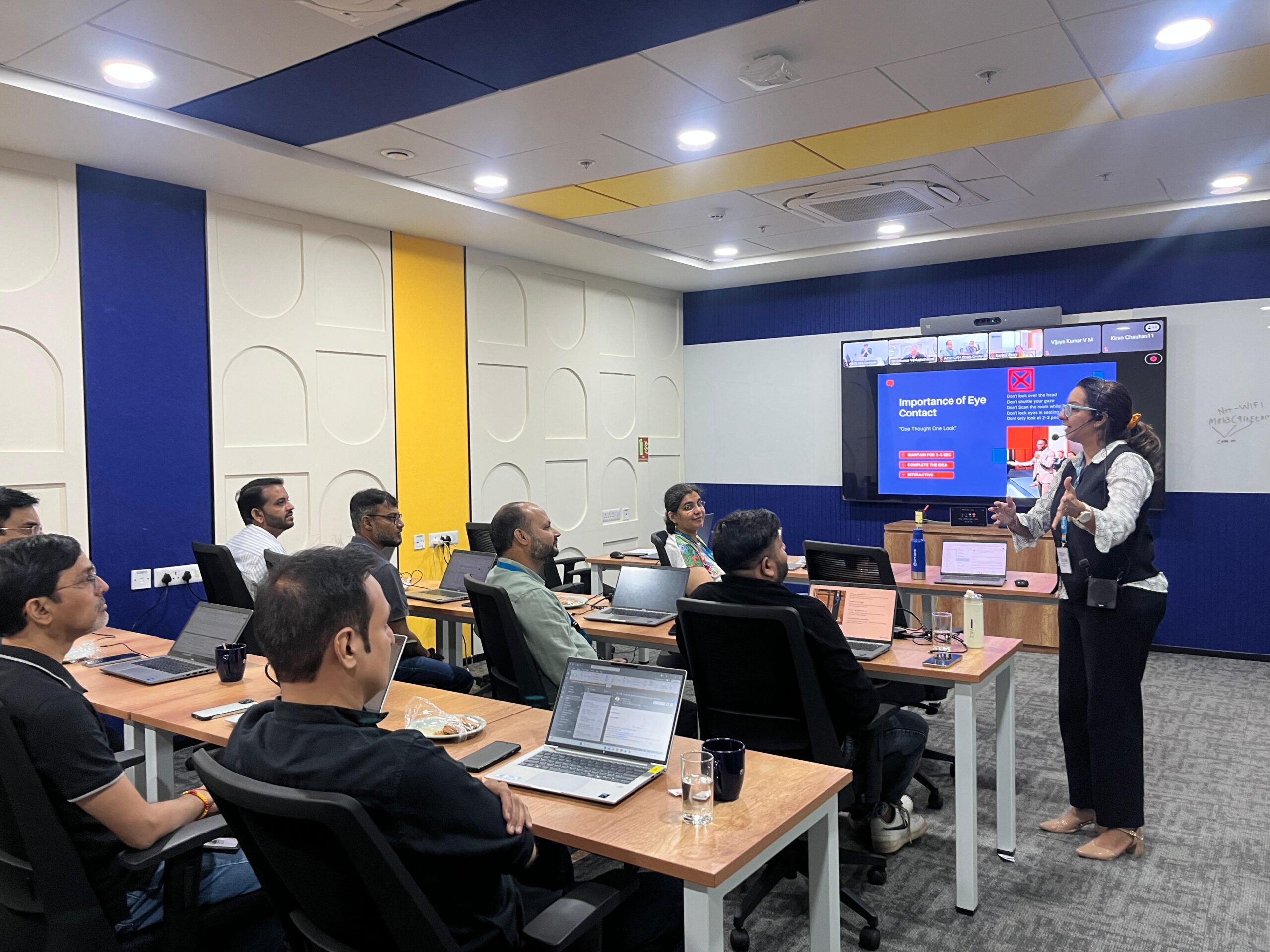
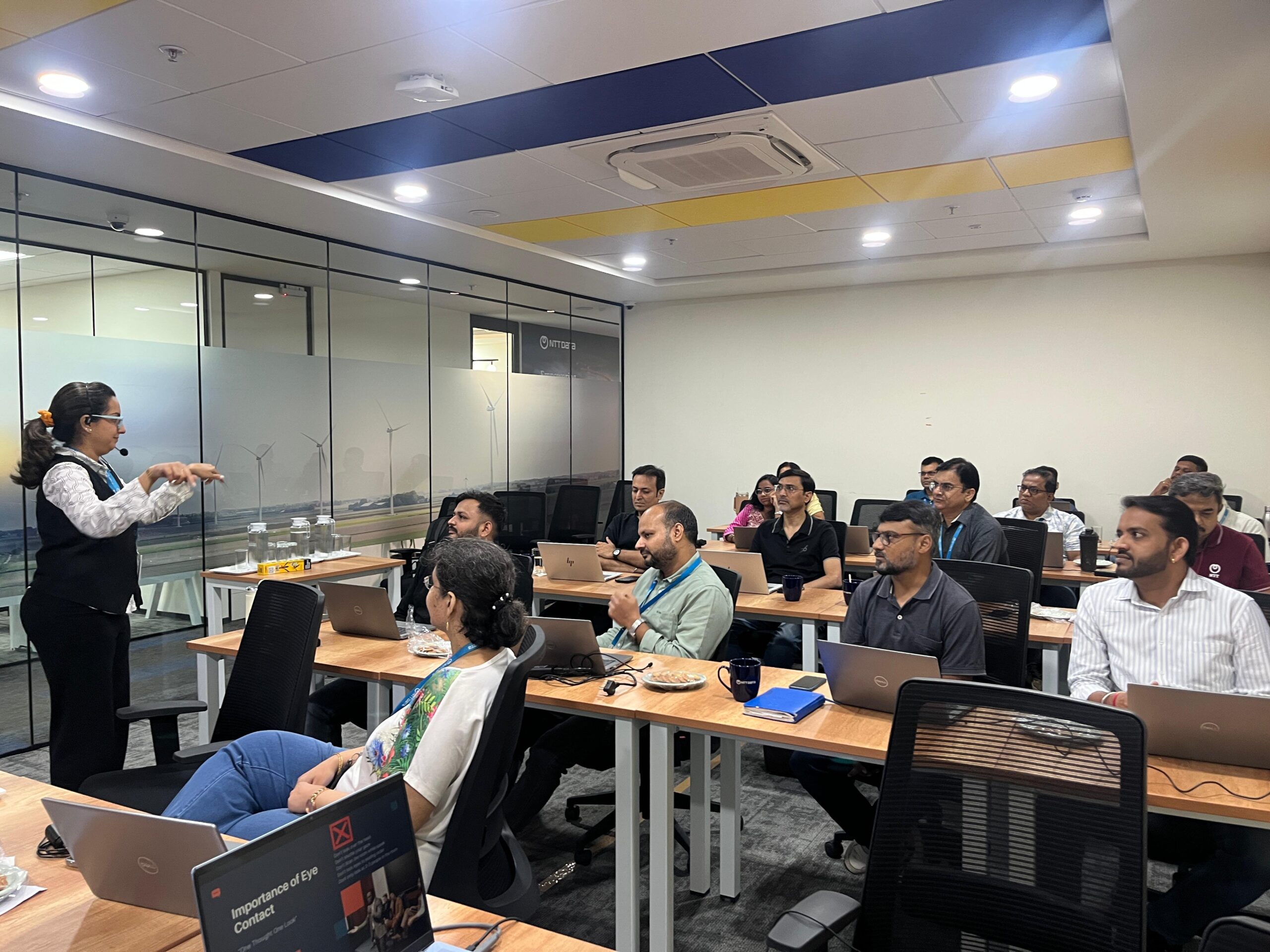
Emotional Intelligence at the Workplace
Duration: 1 Day
Empower Your Workforce with Emotional Intelligence (EQ) Training
In today’s fast-paced corporate environment, technical expertise (IQ) gets your team through the door, but Emotional Intelligence (EQ) drives long-term business success. High-performing teams are built on more than just hard skills—they thrive on strong communication, empathy, resilience, and adaptability.
Our Emotional Intelligence at the Workplace training program in Mumbai is specifically tailored to transform your corporate culture. We bridge the gap between individual capability and collective success by equipping your workforce with the essential soft skills needed to navigate stress, resolve conflicts constructively, and lead with empathy.
Why Prioritize EQ in Your Organization?
- Enhance Leadership Capabilities: Equip your managers to inspire trust, handle high-pressure scenarios, and guide teams effectively.
- Boost Team Collaboration: Foster an inclusive work environment built on empathy, clear communication, and mutual respect.
- Drive Workplace Productivity: Reduce burnout and improve retention by teaching employees how to manage workplace stress and self-regulate emotions.
Understand the 5 components of Emotional Intelligence (Daniel Goleman model)
• Enhance self-awareness and self-regulation in workplace interactions
• Develop empathy and social awareness to strengthen collaboration
• Improve relationship management and leadership effectiveness
• Apply EI strategies to manage stress, conflict, and decision-making
Icebreaker: “Emotions in Action”
Participants are shown emojis or cards with emotions (e.g., frustrated, excited, anxious). Each
acts out the emotion nonverbally; group guesses → highlights how emotions influence
communication.
Module 1: Introduction to Emotional Intelligence
• Content: Define EI, its importance in business outcomes (leadership, sales, teamwork,
customer service).
• Activity: EI Self-Reflection Quiz → participants rate themselves on self-awareness,
regulation, motivation, empathy, and social skills.
• Task: Pair-share on a workplace situation where emotions helped or hurt performance.
Module 2: Self-Awareness & Self-Regulation
• Content: Recognizing triggers, managing reactions, techniques like mindfulness.
• Activity: Emotional Triggers Mapping – participants list 3 situations where they “lose
control.”
• Task: Develop a “pause–reframe–respond” strategy for each trigger.
Module 3: Motivation & Resilience
• Content: Internal motivation vs external rewards; link between EI and persistence.
• Activity: Resilience Story Swap – share a time you bounced back from a challenge;
discuss what emotional strengths helped.
• Task: Create a personal motivation anchor (affirmation, visual cue, or reminder).
Module 4: Empathy & Social Awareness
• Content: Understanding others’ emotions, active listening, perspective-taking.
• Activity: Empathy Walk – participants listen to a partner’s challenge without
interrupting, then reframe it back empathetically.
• Task: Journal: “How did it feel to be listened to vs interrupted?”
Module 5: Relationship Management & Conflict Handling
• Content: Using EI in collaboration, feedback, and conflict resolution.
• Activity: Conflict Roleplay – two colleagues with opposing views practice applying EI
skills (acknowledgment, empathy, solution focus).
• Task: Group debrief → how did empathy and regulation change the outcome?
Module 6: Applying EI at Work
• Content: Embedding EI into leadership, teamwork, and decision-making.
• Activity: Case Study Analysis – Example: Manager under stress giving feedback →
redesign the approach with EI principles.
• Task: Draft a 30-day EI Action Plan (daily reflection, feedback practice, team check-ins).
Wrap-Up & Commitments
• Activity: “EI Contract” – participants write one EI behavior they will start, stop, and
continue at work.
• Reflection: Share personal commitment with group.
Expected Outcomes
• Improved self-awareness and emotional control
• Stronger team relationships through empathy and communication
• Higher resilience under stress and change
• Better conflict resolution and leadership presence

I have attended the advanced excel workshop on the 19th and 20th of December 2020. Everything you need to know about excel in two days, can be found through this workshop. Got a lot ideas and answers to age old doubts. Mr. Faiyaz is a very good teacher for the same. Every technical description was made so simple to understand with great examples. Thankyou sir.

Carol Monteiro

I have attended the Advanced Excel training sessions organised by Sealed Air Packaging Materials India LLP on 15th and 16th December 2020. The sessions conducted by Mr. Faiyaz were very informative, interactive and hand-on despite having a virtual training platform. I would highly recommended this for anybody who wants to enhance their excel skills.
Sampada Munj

The 3 day workshop taught me what i couldn't learn in a span of a year. The way excel is been taught makes you learn the basics and understand the functions and features instead of memorizing things. A big thumbs up to Faiyaz Khairaz for taking the session.
Nitesh Oberoi

Amazing training. I was able to prepare excel dashboards for my organization with their teachings and methods. Even my doubts were solved. Special thanks to Sabiha ma'am and Shaziya ma'am for their training.
Harsh Malhotra

Did a Excel Workshop Course with Faiyaz M Khairaz sir. It was an excellent course for girl like me who had no prior experience with Excel. Sir cleared each and every doubt I had. Thank You Sir for the wonderful training.
Geeta Pansare